Looking for the best 5 player board games that actually shine with exactly five at the table? You’re in the right place. Five is often considered the sweet spot for many board games—enough players for interaction and negotiation, but not so many that downtime drags. We’ve researched and tested the top options to find games with smooth pacing, engaging mechanics, and minimal waiting around. Below you’ll find our top picks followed by in-depth reviews and buying advice.
Our Top Picks
In a hurry? Here are the standout games that play best at five players—whether you want strategic depth, easy gateway fun, or chaotic negotiations.

2-5 Players | 45-60 min | Family-Friendly
The definitive gateway game that’s tense and competitive at 5 players without overwhelming anyone.

3-7 Players | 30 min | Card Drafting
Simultaneous card drafting means zero downtime—everyone plays at once, even with 5+ players.

3-5 Players | 60-120 min | Negotiation
Wild asymmetric powers and alliance-building chaos—this classic truly shines at 5 players.
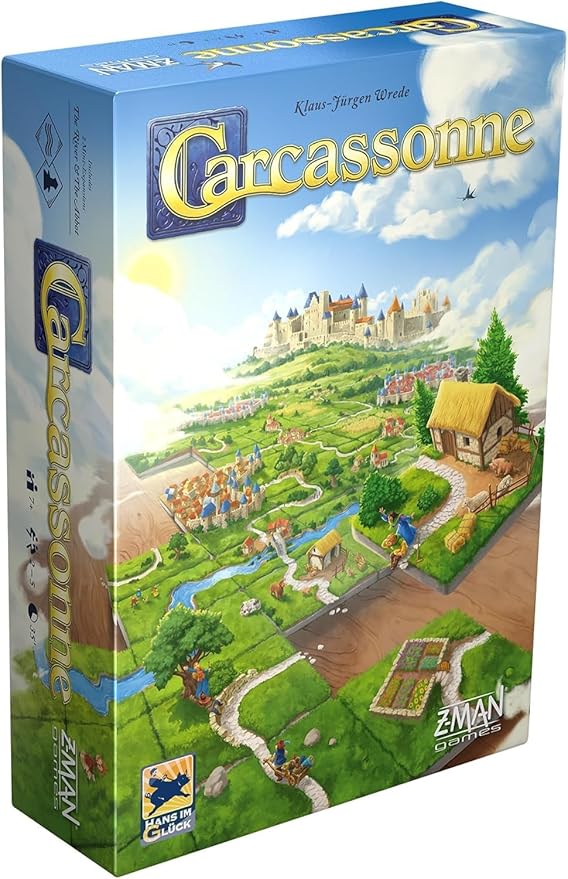
2-5 Players | 35-45 min | Tile Laying
Easy to learn, surprisingly cutthroat at 5 players, and affordable with tons of expansions.
What Makes a Great 5 Player Board Game?
Not every game works well at exactly five players. Some are designed for fewer and drag with more; others need six to really come alive. The best 5 player board games share a few key traits:
- Low downtime: Nobody wants to wait 10 minutes between turns. Games with simultaneous action, quick turns, or ways to stay engaged during others’ turns are essential.
- Balanced player interaction: Five is enough for alliances, trading, and table talk without becoming chaotic. The best games leverage this.
- Scalable mechanics: The game should feel tight and competitive at 5—not too crowded or too empty.
- Reasonable playtime: With five schedules to coordinate, games that wrap up in 60-90 minutes tend to hit the table more often.
We evaluated each game below based on how well it performs specifically at the 5-player count, considering pacing, engagement, and overall fun factor.
1. Ticket to Ride
Ticket to Ride is the quintessential gateway game, and it’s at its absolute best with 5 players. In this set-collection game, you’re claiming train routes across North America by collecting colored cards and placing your trains on the board. The goal? Complete secret destination tickets connecting distant cities while blocking your opponents’ routes.
What makes it shine at 5 players is the increased tension. Routes get claimed faster, forcing tough decisions about when to grab that critical connection before someone else does. The board becomes a battlefield of competing networks, and the race for long routes intensifies. Turns are quick—draw cards or claim a route—so downtime stays minimal even with a full table.
Ticket to Ride works beautifully for families, casual gamers, and mixed-experience groups. The rules take five minutes to explain, but there’s enough strategy to keep experienced players engaged. It’s the kind of game that non-gamers request to play again.
The only downside? At 5 players, some routes can feel impossibly contested, and bad luck with card draws can occasionally frustrate. But that tension is also what makes victories so satisfying.
Bottom line: If you want one game that works for virtually any group at 5 players, Ticket to Ride is the safest, most reliable choice.
2. Power Grid

Power Grid is an economic strategy masterpiece that board game enthusiasts have loved for over two decades. You’re building a power network across Germany (or other maps), buying power plants at auction, purchasing resources to fuel them, and expanding your grid to power more cities. The player who powers the most cities wins.
At 5 players, Power Grid transforms into a cutthroat economic puzzle. The resource market becomes incredibly tight—buy coal early and watch prices spike for everyone else. The map gets crowded fast, making expansion decisions critical. The auction system creates constant player interaction, and the catch-up mechanics keep everyone competitive until the final round.
This is a game for players who love number-crunching, long-term planning, and economic manipulation. Every decision matters: which plants to bid on, when to expand, how to manipulate resource availability. It rewards careful calculation and punishes impulsive plays.
The learning curve is real—expect your first game to be a learning experience. Games also run 2+ hours with 5 players. But for groups seeking meaty strategic depth, few games deliver as consistently as Power Grid.
Bottom line: The thinking person’s 5-player game. If your group loves economic strategy and doesn’t mind a longer playtime, Power Grid delivers brilliantly.
3. El Grande

El Grande is the granddaddy of area control games, and many consider it the definitive experience at exactly 5 players. Set in medieval Spain, you’re a Grande (nobleman) seeking to control regions by placing your Caballeros (knights) across the map. Points come from controlling regions during scoring rounds—but the ever-present Castillo adds delicious uncertainty to every count.
The game’s genius lies in its action card system. Each round, you select power cards that determine both turn order and how many Caballeros you can deploy. Do you grab the powerful card to act first, or take a weaker one to deploy more troops? These tension-filled decisions cascade through every round.
At 5 players, El Grande sings. The competition for regions intensifies, alliances form and break, and the timing of scoring rounds becomes crucial. There’s no combat—just pure positioning, timing, and reading your opponents. It’s simultaneously elegant and brutal.
The game can feel “thin” at lower player counts, but with 5, the board constantly shifts and no region is ever safe. Games run about 90 minutes once everyone knows the rules.
Bottom line: If you want a pure, elegant area control experience that’s been perfected over decades, El Grande at 5 players is a must-play classic.
4. Cosmic Encounter
Cosmic Encounter is controlled chaos in a box—and at 5 players, it’s absolute perfection. Each player controls an alien species trying to establish colonies on opponents’ planets. The twist? Every alien has a game-breaking power that fundamentally changes how they play. One alien might win encounters by losing, another might steal cards, and another might multiply their ships.
The core gameplay involves encounters where you invite allies, play attack cards, and negotiate—or bluff, backstab, and double-cross. With 5 players, there’s always someone to ally with, deals to cut, and shifting allegiances to navigate. The game encourages (demands, really) negotiation and table talk.
With 50+ aliens in the base game and hundreds across expansions, no two games feel the same. The combination of powers creates emergent chaos that leads to legendary gaming stories. “Remember when the Virus allied with the Oracle against the Pacifist?” These are the moments Cosmic Encounter creates.
Fair warning: this is not a balanced, strategic experience. It’s wild, swingy, and occasionally unfair. Some people find it frustrating; others find it liberating. If your group loves social interaction and embraces chaos, Cosmic Encounter at 5 players is unmatched.
Bottom line: The ultimate social/negotiation game that shines brightest with exactly 5 players. Embrace the chaos.
5. Viticulture Essential Edition

Viticulture puts you in charge of a rustic Tuscan vineyard. Plant vines, harvest grapes, make wine, and fill orders to build your winemaking empire. It’s a worker placement game where you assign your workers to various actions—but here’s the twist: the game splits into summer and winter seasons, with different actions available in each.
The Essential Edition includes elements from the Tuscany expansion that smooth out gameplay and add strategic depth. At 5 players, competition for action spaces intensifies significantly. Blocking becomes crucial—taking a harvest spot might set your opponent back an entire year. The “Grande Worker” that can squeeze into full spots becomes incredibly valuable.
What sets Viticulture apart is its gorgeous presentation and thematic immersion. The beautiful board, detailed components, and wine-themed artwork create an atmosphere that draws players in. It’s accessible enough for newer gamers while offering strategic depth for veterans.
Games run about 90 minutes at 5 players. The main downside is that heavy blocking can occasionally feel frustrating for players who fall behind. But for groups who enjoy worker placement competition, Viticulture delivers a consistently satisfying experience.
Bottom line: A beautiful, thematic worker placement game that balances accessibility with strategic depth. Perfect for groups who enjoy medium-weight strategy.
6. 7 Wonders
7 Wonders revolutionized card-drafting games and remains one of the fastest-playing games for higher player counts. Each player develops a civilization across three ages, drafting cards simultaneously from a hand that gets passed around the table. Build production chains, construct your wonder, field armies, and develop science for massive point combos.
The simultaneous play mechanic is 7 Wonders’ superpower. Everyone picks and plays at the same time, meaning a 5-player game takes the same 30-40 minutes as a 3-player game. There’s literally no downtime—while you’re planning your move, so is everyone else.
At 5 players, you interact with four different neighbors over the course of the game (two neighbors each get the hand you pass). This creates interesting dynamics as you balance building your own engine with hate-drafting cards your opponents need. The military comparison with neighbors adds tension without direct conflict.
The iconography takes a few plays to internalize, and scoring can be complicated for newcomers. But once the symbols click, 7 Wonders becomes a breezy, replayable experience that respects your time.
Bottom line: When you want strategic depth in under 45 minutes with 5 players, 7 Wonders delivers like nothing else.
7. Carcassonne
Carcassonne is pure, elegant tile-laying that’s been a board game staple since 2000. Draw a tile, place it to extend the medieval French landscape, and optionally place a “meeple” to claim features—cities, roads, monasteries, or fields. Score points when features complete, with bigger features worth more.
At 5 players, Carcassonne transforms from a peaceful building game into a territorial battle. With more players drawing tiles, cities complete faster (or get sabotaged more often). The farmer game becomes incredibly competitive since fields overlap and can be stolen. You’ll find yourself planning moves ahead while also reacting to opportunities and threats from four opponents.
The beauty of Carcassonne is its accessibility paired with surprising depth. The rules take two minutes to teach, but mastering tile placement, meeple management, and farmer strategy takes much longer. It’s perfect for mixed groups where some players are casual and others competitive.
Games run 45-60 minutes at 5 players. The main criticism? With more players, there’s less control over the game state—you might plan a perfect move only to have four players draw before you. But that unpredictability also creates excitement.
Bottom line: The most accessible game on this list that still delivers genuine strategy. An excellent value with countless expansions available.
8. Citadels

Citadels is a clever role-selection game where you’re building a city district by district. Each round, players secretly choose character cards that determine turn order and grant special abilities. The Assassin can kill another character (they lose their turn), the Thief steals gold, the Magician swaps hands, and so on. The twist? You’re choosing characters blind, trying to predict what others will pick.
At 5 players, the mind games intensify. With more characters in play, the Assassin has more targets—and more potential to whiff. The Thief becomes trickier to use. Reading the table, anticipating choices, and occasionally bluffing become central skills. It creates a delicious paranoia: “Did they take the King to go first, or are they baiting me?”
The 2016 edition includes tons of extra characters, letting you customize the game to your group’s preferences. Want more direct conflict? Add aggressive characters. Prefer building? Focus on economic roles.
Citadels can drag with slow players (analysis paralysis during character selection), and there’s definitely a learning curve to reading the meta. But for groups who enjoy social deduction and bluffing, it’s endlessly replayable.
Bottom line: A compact game of bluffing and deduction that fits in your pocket but delivers big mind games.
How to Choose the Right 5 Player Board Game
With so many excellent options, how do you pick the right one for your group? Consider these factors:
Your group’s experience level: For newer gamers or mixed groups, start with Ticket to Ride, Carcassonne, or 7 Wonders. These teach quickly and play smoothly. Save Power Grid and El Grande for groups comfortable with heavier strategy.
Desired playtime: If you’ve got 30-45 minutes, 7 Wonders is unbeatable. For 60-90 minute sessions, Ticket to Ride, Carcassonne, and Citadels work great. Budget 2+ hours for Power Grid or a longer Cosmic Encounter session.
Interaction style: Want negotiation and table talk? Cosmic Encounter dominates. Prefer quieter, puzzle-like competition? Try Viticulture or 7 Wonders. Looking for area control tension? El Grande is your game.
Tolerance for chaos: Some groups want tight, balanced competition. Others embrace wild swings and memorable moments. Cosmic Encounter is glorious chaos; Power Grid rewards careful calculation. Know your group.
FAQs About 5 Player Board Games
What’s the best 5 player board game for beginners?
Ticket to Ride is the gold standard. It teaches in minutes, plays in under an hour, and is genuinely fun for first-timers and veterans alike. Carcassonne is also excellent for new players.
Do these games work well at other player counts?
Most do, but some shine specifically at 5. El Grande is noticeably better at 4-5 than at 3. Cosmic Encounter needs at least 4 to function and is best at 5. 7 Wonders and Ticket to Ride work well across their full range.
What 5 player games have the least downtime?
7 Wonders has zero downtime due to simultaneous play. Ticket to Ride has quick turns. Cosmic Encounter keeps everyone engaged through alliances. Power Grid and Citadels can have longer waits between turns.
Are there good 5 player cooperative games?
This list focuses on competitive games, but Pandemic, Spirit Island, and The Crew all work at 5 players if your group prefers cooperation.
How much should I spend on a 5 player board game?
Most games on this list run $30-50, which is standard for quality board games. Carcassonne and Citadels offer excellent value at the lower end. Consider cost-per-play: a $45 game you play 20 times costs $2.25 per session.
Final Thoughts
Five players is a sweet spot for board gaming—enough for rich interaction without excessive downtime. Our top recommendation for most groups is Ticket to Ride: it’s welcoming to newcomers, competitive enough for veterans, and consistently delivers fun at exactly 5 players.
For groups seeking faster play, 7 Wonders packs real strategy into 30 minutes. If you want social chaos and memorable moments, Cosmic Encounter is unmatched. And for those who love economic brainteasers, Power Grid rewards repeat plays with incredible depth.
Whatever your group’s style, there’s a perfect 5-player game waiting. Pick one, gather your friends, and enjoy the magic of board gaming at its best player count.
]]>