The best party board games for adults turn any gathering into a memorable event. Whether you’re hosting game night, celebrating a birthday, or just looking for something to do after dinner with friends, the right party game breaks the ice, gets everyone laughing, and creates stories you’ll retell for years. We’ve rounded up the top picks for adult groups—games that are easy to learn, hilarious to play, and perfect for 6+ players with drinks in hand.
Our Top Picks
Short on time? Here are our top party games for adults—from clever wordplay to chaotic drawing disasters. All play well with larger groups and don’t require gaming experience.

4-8+ Players | 15-30 min | Word Association
The modern party game classic—clever clue-giving creates tension, triumph, and hilarious failures.
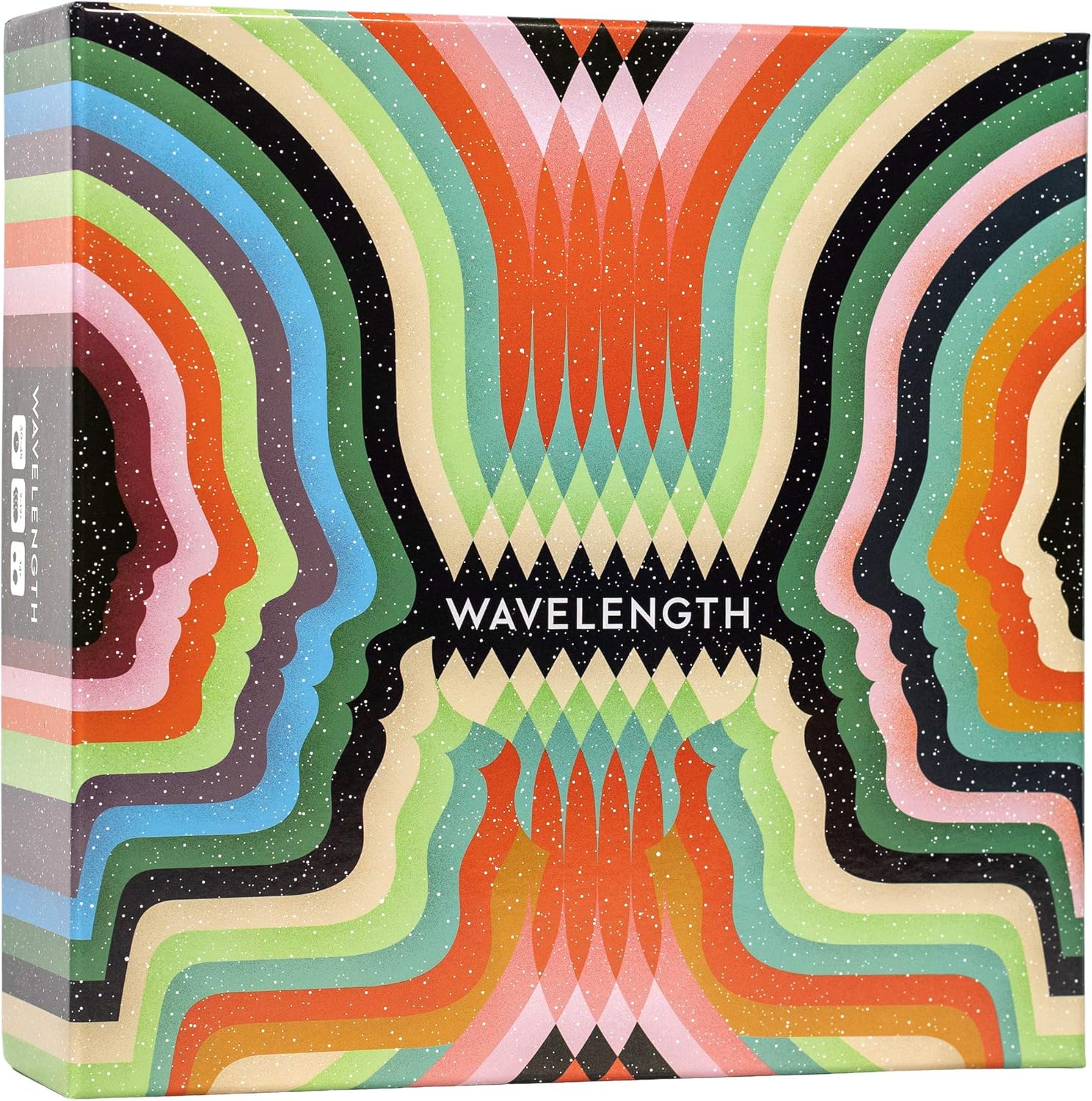
4-12+ Players | 30-45 min | Guessing
Spark endless debates with spectrum clues—”Is a hot dog closer to a sandwich or not a sandwich?”

4-12 Players | 30 min | Drawing
Telephone meets Pictionary—watch words transform into hilarious disasters through bad drawings.

2-8 Players | 20 min | Card Drafting
Adorable card drafting with tons of variety—fast, light, and perfect for non-gamers.
What Makes a Great Party Game for Adults?
The best party board games for adults share some key characteristics that set them apart from more serious hobby games:
- Easy to teach: If it takes more than 5 minutes to explain, you’ve lost half the room. Party games need to get everyone playing fast.
- No turn-based downtime: Everyone should be engaged throughout, whether through simultaneous play, team dynamics, or quick rounds.
- Social interaction: The game should create conversation, laughter, and memorable moments—it’s a vehicle for fun, not a puzzle to solve.
- Scales to larger groups: Party games should work with 6-12+ players without becoming chaotic or taking forever.
- Low barrier to entry: Non-gamers should feel comfortable jumping in without fear of losing badly.
The games below all excel in these areas while offering different flavors of fun—from clever wordplay to chaotic creativity.
1. Codenames
Codenames has earned its reputation as the modern classic of party games. Two teams compete to identify their agents from a grid of 25 words. Each team’s spymaster gives one-word clues that can point to multiple words—”Ocean, 3″ might connect Beach, Ship, and Blue. But watch out: hit the opposing team’s words or the dreaded assassin, and you’re in trouble.
What makes Codenames brilliant is how it rewards clever thinking while creating tension for everyone. The spymaster agonizes over the perfect clue while their team debates interpretations. “Does ‘cold’ mean Ice or War?” These discussions are where the magic happens—you learn how your friends think (and sometimes how bizarrely they connect concepts).
The game works beautifully at party sizes because you can split any number of people into two teams. With more players, you get more perspectives during discussions. Games take 15-30 minutes, so you can easily play multiple rounds in an evening.
The only downside is that being spymaster can feel stressful for some players, and the game works better with people who have similar pop culture knowledge. But for most adult groups, Codenames delivers consistently engaging gameplay night after night.
Bottom line: If you buy one party game, make it Codenames. It’s earned its status as the go-to choice for adult game nights.
2. Wavelength
Wavelength takes a simple concept and turns it into endless entertainment. A card shows a spectrum between two opposites—say, “Bad Habit” to “Good Habit.” A hidden target sits somewhere on that spectrum. The clue-giver peeks at the target, then gives a clue to help their team guess where it falls. If the target is slightly toward “Good Habit,” maybe they say “Checking your phone.” Now the team debates: is that mostly bad, slightly bad, or neutral?
The genius of Wavelength is how it generates conversations. Where exactly does “taking a daily multivitamin” fall on the healthy spectrum? What makes a sandwich more or less “a sandwich”? These seemingly simple questions reveal fascinating differences in how people think—and often spark hilarious debates.
Teams take turns being the clue-giver, and the satisfying plastic dial makes revealing the actual target dramatic every time. The game scales effortlessly from 4 to 12+ players, with larger groups creating more diverse opinions during discussions.
Some clue cards work better than others, and occasionally the target lands in a spot that’s genuinely hard to clue. But the conversation along the way is always entertaining, even when guesses miss badly.
Bottom line: Wavelength turns subjective opinions into a game—and the debates it creates are worth playing for alone.
3. Monikers

Monikers is essentially a polished, boxed version of the classic party game Celebrities (or “Fishbowl”). Everyone contributes cards to a shared deck, then teams race to get their teammates to guess as many as possible. Here’s the twist: you play the same deck three times with increasing restrictions. Round one: say anything except the name. Round two: one word only. Round three: charades only.
The magic happens as the game progresses. By round three, inside jokes have developed around each card. “Kevin Bacon” becomes a specific gesture that everyone understands from earlier rounds. Obscure references like “the guy who invented the GIF” transform into hilarious shorthand. The shared memory created across rounds is what makes Monikers special.
The card deck includes celebrities, memes, historical figures, fictional characters, and weird concepts—all with point values based on difficulty. You’ll find everything from “Abraham Lincoln” to “the concept of zero” to “that guy from the thing.”
Monikers requires at least 6 players to really sing, and it helps if your group shares pop culture knowledge. But for the right group, it’s the funniest party game around.
Bottom line: If your friends love charades but want more structure and better prompts, Monikers delivers endless hilarity.
4. Just One

Just One flips the script on competitive party games—everyone works together. One player closes their eyes while everyone else sees a secret word. Each person writes a one-word clue to help the guesser. The twist? Before revealing clues, identical or too-similar clues are removed. If three people all wrote “trunk” for “elephant,” the guesser sees nothing useful.
This creates a fascinating dilemma: do you give the obvious clue and risk matching others, or try something creative and risk being unhelpful? The tension of the reveal—watching clues get eliminated—creates dramatic moments that few games match. Sometimes the guesser sees “gray, big” and has no idea. Sometimes they see just “Babar” and nail it.
Just One won the prestigious Spiel des Jahres (Game of the Year) award, and for good reason. It’s incredibly easy to teach, plays in 20 minutes, and works with 3-7 players (or more with house rules). The cooperative nature means nobody feels left out or embarrassed.
The game can feel repetitive after many plays with the same group, but it’s perfect for parties where not everyone knows each other well.
Bottom line: The best cooperative party game for adults—low stress, big laughs, and everyone wins (or loses) together.
5. Telestrations
Telestrations combines telephone with Pictionary, and the results are consistently hilarious. Everyone starts with a secret word and draws it. Pass your sketch to the next player, who guesses what it is. They write their guess, pass it, and the next person draws that guess. This continues until your booklet returns—then everyone reveals the chaotic evolution from start to finish.
The joy of Telestrations comes from the reveals. Watching “birthday cake” transform into “candle” then “fire” then “campfire” then “s’mores” then… a terrifying blob that somehow got guessed as “alien invasion”—this is pure party game gold. Bad drawing skills make the game funnier, not worse.
The standard edition plays 4-8, but the 12-player party pack is essential for larger groups. There’s even an “After Dark” edition with more adult prompts if your group skews that direction.
The main limitation is that Telestrations requires everyone to be drawing/guessing simultaneously, so very large groups need multiple sets. But for groups of 6-12, it’s an absolute blast.
Bottom line: The guaranteed laugh generator. If your party needs energy, bring out Telestrations.
6. Sushi Go Party
Sushi Go Party is the expanded version of the beloved Sushi Go, adding more card types and supporting up to 8 players. Everyone simultaneously picks a card from their hand, reveals it, then passes the remaining cards. Over three rounds, you’re collecting sets of adorable sushi for points—tempura in pairs, sashimi in threes, and various special cards that score in unique ways.
What makes Sushi Go Party work at parties is its pure simplicity combined with light strategy. Non-gamers grasp it immediately, but there’s just enough depth to keep experienced players engaged. The simultaneous play means no downtime, and games wrap up in 20 minutes.
The “Party” version includes a menu system where you choose which cards to use each game, adding tons of variety. Want more direct competition? Add cards that steal from others. Want a chill experience? Stick to basic set collection.
The game is on the lighter side strategically, which some players find limiting. It’s also less chaotic/funny than games like Telestrations—more “pleasant” than “hilarious.” But for mixed groups or as a warm-up game, it’s fantastic.
Bottom line: The perfect gateway game for non-gamers—cute, quick, and universally appealing.
7. Spyfall

Spyfall is a clever social deduction game where everyone receives a card showing the same location—except one player, who gets “Spy.” Players take turns asking each other questions, trying to identify the spy without giving away the location. The spy, meanwhile, tries to figure out where everyone is while blending in.
The questions create delightful tension. “How did you get here?” seems innocent at a school but suspicious at a submarine. “What’s your favorite part of working here?” might out the spy or accidentally reveal you’re at a casino. The spy must navigate these questions while gleaning context clues—and can win instantly by guessing the location correctly.
Spyfall plays 3-8 players and takes about 10 minutes per round, making it easy to play multiple games. The included locations range from mundane (supermarket) to exotic (space station), keeping things fresh.
The game depends heavily on player creativity—bland questions make for a boring game. It also helps if everyone’s familiar with the locations. But with an engaged group, Spyfall creates tense, funny moments as people try to seem normal while suspicious of everyone.
Bottom line: Quick social deduction that creates paranoia and laughs in equal measure.
8. Saboteur

Saboteur casts players as dwarves digging for gold—but some are secretly saboteurs trying to prevent the team from reaching the treasure. Everyone plays tunnel cards to build paths toward goal cards, but saboteurs subtly block progress, cause cave-ins, and break tools while trying not to get caught.
The game creates wonderful paranoia. Why did they play a dead-end card? Was it their only option, or are they sabotaging? Should we break their pickaxe to be safe, or will that slow us down if they’re innocent? These accusations and defenses drive the fun.
Saboteur plays 3-10 players and includes multiple rounds so everyone gets chances as both roles. Games run about 30 minutes. The rules are simple—play a card or pass—but the social dynamics are rich.
The base game can feel a bit luck-dependent, and the saboteur role is challenging when you’re the only one. The Saboteur 2 expansion adds team dynamics and new roles that many prefer. But even the base game provides solid party entertainment at a budget price point.
Bottom line: A budget-friendly hidden role game that works great for larger groups who enjoy bluffing and accusations.
How to Choose the Right Party Game
Picking the perfect party game depends on your specific group and situation:
For word lovers: Codenames and Just One deliver clever wordplay without requiring drawing skills or physical performance.
For maximum laughs: Telestrations and Monikers create the most memorable moments and loudest laughter, especially as drinks flow.
For groups who love debating: Wavelength sparks endless discussions about subjective opinions—perfect for opinionated friend groups.
For mixed groups with non-gamers: Just One (cooperative, low pressure) and Sushi Go Party (simple, adorable) welcome newcomers warmly.
For social deduction fans: Spyfall and Saboteur scratch the “who’s the traitor?” itch without the complexity of Werewolf or Mafia.
FAQs About Party Games for Adults
What’s the best party game for people who don’t usually play games?
Just One is nearly foolproof—it’s cooperative, takes 30 seconds to explain, and nobody feels put on the spot. Telestrations also works because bad drawing actually makes it funnier.
Which games work best with alcohol involved?
Telestrations and Monikers get better with drinks. Codenames requires enough sobriety to think strategically. Wavelength works either way—debates get louder but no less fun.
How many players do I need for a good party game?
Most party games hit their stride around 6-8 players. Fewer than 4 usually feels thin; more than 10-12 can get chaotic. Telestrations and Monikers specifically need 6+ to really shine.
Are there good party games without cards or boards?
Two Truths and a Lie, 20 Questions, and Celebrity/Fishbowl all work with just paper. But the games on this list provide structure, prompts, and components that improve the experience.
What party games work for introverts?
Just One and Codenames let players contribute without being the center of attention. Avoid Monikers or Spyfall if anyone in your group dislikes performing.
Final Thoughts
The best party board games for adults bring people together through shared laughter and memorable moments. For most groups, Codenames is the safest starting point—it’s become a modern classic for good reason.
If you want guaranteed laughs, grab Telestrations. For thought-provoking fun, Wavelength sparks debates you’ll still be having at brunch the next day. And if you need something ultra-accessible for a mixed crowd, Just One welcomes everyone.
Whatever you choose, the real magic comes from the people around the table. These games are just the spark—your friends provide the fire.
]]>