best board games for teens walk a fine line—they need enough depth to engage developing minds, social elements for group hangouts, and themes that don’t feel childish. Whether it’s a sleepover, family game night, or just something to do on a weekend, these games deliver.We’ve curated picks that span from fast party games to strategic showdowns, so every type of teen gamer can find something they’ll actually want to play.
Top Picks at a Glance
Here are our standout recommendations based on engagement, social appeal, and replayability:
Teens are a unique audience. They’re past the age of simple kids’ games, but not necessarily looking for the heavy complexity that adult hobby gamers might crave. The best games for this age group share some common traits:
Social interaction – Games that spark conversation, laughter, or friendly rivalry
Quick setup and play – Attention spans are precious; long setup kills momentum
Room for personality – Bluffing, creativity, or personal expression
Scalable depth – Simple to learn but rewarding to master
Themes that resonate – Not too childish, not too dry
Catan is the definitive gateway strategy game, and for many teens, it’s their introduction to “real” board gaming. Players settle an island, collect resources (wood, brick, sheep, wheat, ore), and trade with each other to build roads, settlements, and cities.What makes Catan special is the negotiation. The table talk—”I’ll give you two sheep for one wheat”—creates natural social interaction. It’s competitive but not cutthroat, strategic but not overwhelming.Why teens love it: The trading element is inherently social and often hilarious. Grudges form, alliances shift, and someone always says “nobody has wheat?!” in disbelief.Best for: Groups of 3-4, families, teens who enjoy strategy and negotiation.Any downsides? Dice luck can be frustrating when your numbers never roll. But that’s also part of the drama.
Telestrations is essentially “Telephone” meets “Pictionary,” and it’s an absolute riot. You draw a word, pass your sketchbook, the next person guesses what you drew, passes it, someone draws THAT guess, and so on. By the end, “Birthday Cake” has somehow become “Angry Volcano.”The joy isn’t in winning—it’s in the inevitable chaos when everyone reveals their sketchbooks. Bad drawing skills are actually an asset.Why teens love it: It’s impossible not to laugh. The worse you draw, the funnier the results. Perfect for sleepovers and mixed groups.Best for: Large groups (6-8 is ideal), parties, people who don’t take themselves seriously.Any downsides? Needs a bigger group to really shine. With only 4 players, it loses some magic.
Tapple is a high-speed word game where you race against a timer to name something in a category starting with an available letter—then tap that letter so no one else can use it. Categories like “Things at a Beach” or “Pizza Toppings” sound simple until you’re under pressure and the obvious letters are gone.It’s basically hot potato meets Scattergories, and it’s way more intense than it sounds.Why teens love it: The time pressure creates genuine tension and lots of shouting. Quick rounds mean eliminated players aren’t waiting long.Best for: Mixed ages, quick filler between games, groups who enjoy thinking-on-their-feet challenges.Any downsides? Can feel repetitive if played too many rounds in a row. Best in short bursts.
Hues and Cues presents a beautiful gradient board with hundreds of color squares. One player gives clues to help others guess their secret color—but you can only use one-word or two-word clues. Is “forest” the right green? Or is it “lime”? What about “frog”?The debates about where to place your guess create fantastic moments. “That’s obviously not ‘sunset’—sunset is way more orange!”Why teens love it: The color board is visually stunning, and the clue-giving sparks creative thinking and friendly arguments.Best for: Visual thinkers, artistic types, groups who enjoy Codenames-style clue games.Any downsides? Color perception varies between people, which can occasionally feel unfair. But it’s mostly hilarious.
Coup is a lightning-fast bluffing game set in a dystopian future. Each player has two hidden influence cards, and on your turn, you claim to have certain characters to take powerful actions. But here’s the twist—you can lie. Claim to have the Duke when you don’t. Just pray nobody calls your bluff.Games last 10-15 minutes, and the tension ratchets up quickly. Trust nobody.Why teens love it: The bluffing is addictive. Learning to read your friends, catching liars, and pulling off bold lies creates memorable moments.Best for: Groups of 4-6, people who enjoy deception games, quick filler games.Any downsides? Elimination can feel bad if you’re out early. But rounds are so short it’s barely a problem.
Codenames is a team-based word association game where spymasters give one-word clues to help their team identify their agents from a grid of words. The challenge? Your clue needs to link multiple words together while avoiding the opposing team’s agents—and the deadly assassin.It’s simple enough to explain in two minutes but endlessly replayable thanks to random word combinations.Why teens love it: Clever clues feel amazing when they work. The team element creates shared victories (and shared groans when someone picks the assassin).Best for: Groups of 4-8+, families, teens who enjoy word games and collaborative thinking.Any downsides? Quiet players can feel overshadowed by more vocal teammates. Rotate spymaster roles to keep everyone engaged.
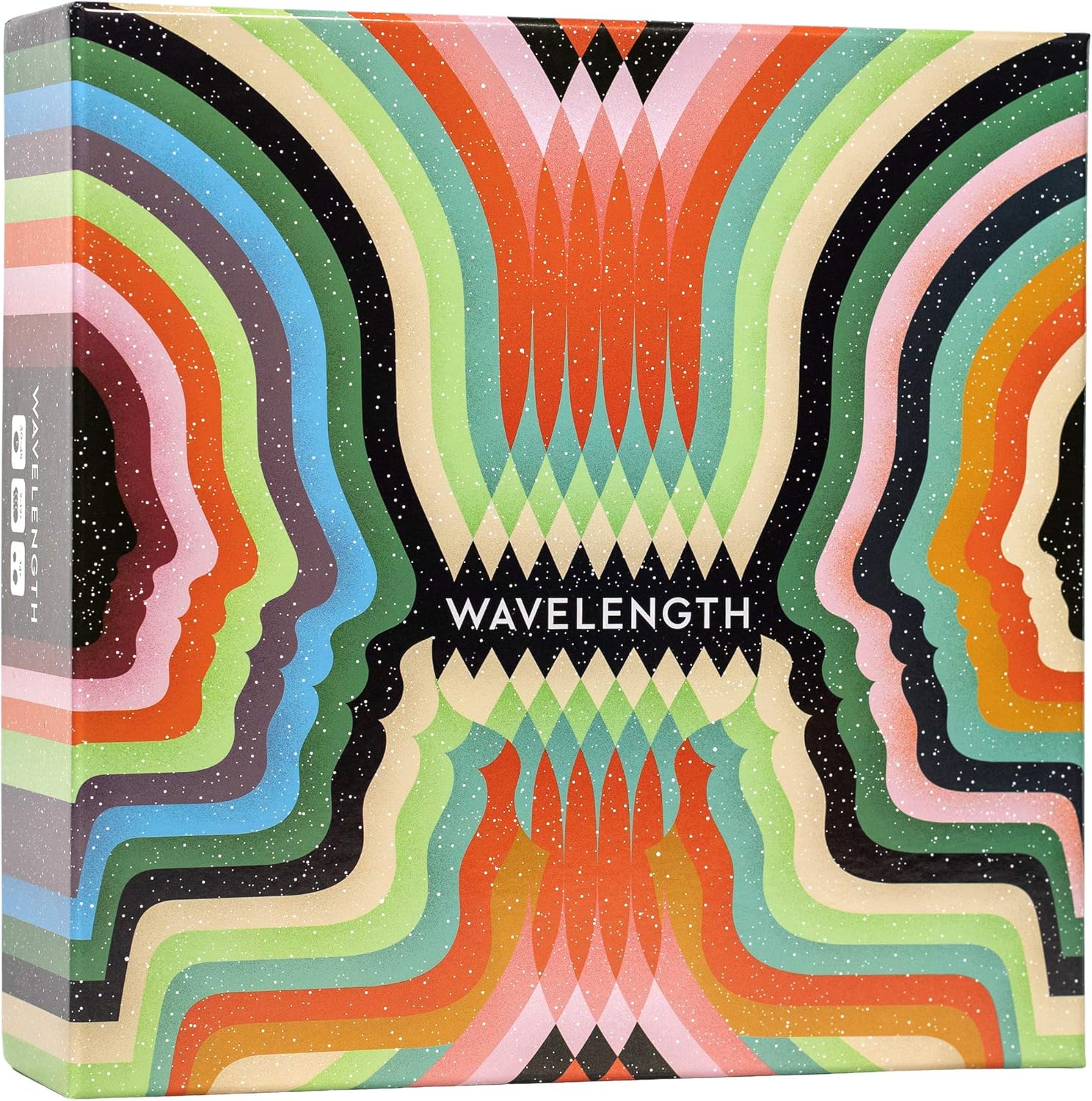
Wavelength uses a physical dial showing a spectrum between two concepts (like “Hot—Cold” or “Good—Evil”). One player sees where the hidden target is on that spectrum and gives a clue. Their team then debates where to place the dial. Is “Room Temperature Coffee” closer to Hot or Cold?The discussions are the game. Watching your team argue about where “The Sun” falls on “Underrated—Overrated” is pure entertainment.Why teens love it: It sparks incredible conversations and debates. You’ll learn how your friends think in surprising ways.Best for: Parties, large groups, people who love discussion-based games.Any downsides? Needs enough players to form teams (6+ is ideal). The physical component is cool but makes it less portable.
Here’s a quick guide based on what you’re looking for:For sleepovers and parties: Telestrations, Wavelength, or Codenames—all handle larger groups and generate lots of laughter.For smaller gatherings (3-5 people): Coup or Catan—both shine at this player count with meaningful player interaction.For a quick game before dinner: Tapple or Coup—both play in under 15 minutes.For teens who want “real” strategy: Catan is the natural choice as a gateway to deeper games.For creative types: Hues and Cues and Wavelength both reward creative thinking.
FAQs About Board Games for Teens
What if some players are more competitive than others?
Choose team-based games like Codenames or Wavelength where winning feels shared. Or pick lighter games like Telestrations where the fun comes from the journey, not the score.Are these games also fun for adults?
Absolutely. Every game on this list works for adult game nights too. They’re designed to scale—teens enjoy them, and so do parents and college students.How do I get reluctant teens to try board games?
Start with Coup or Telestrations—both are quick, low-commitment, and prove board games aren’t “boring” fast.What’s the best game for mixed ages (teens + younger kids)?
Tapple works across ages since it’s word-based and physical. Telestrations also works well if younger kids can draw.Should I avoid games with elimination?
Coup has elimination, but rounds are so short it’s rarely an issue. For longer games, team-based options like Codenames keep everyone involved throughout.
Final Thoughts
If you’re only getting one game, Codenames is the safest bet—it works for almost any group size and never fails to engage.For smaller, strategy-focused groups, Catan remains the gold standard gateway game.And if you want pure party chaos that’s guaranteed to get everyone laughing, Telestrations or Wavelength will deliver every time.Put away the phones, gather around the table, and get ready for some real connection.]]>