Game night is only as good as the games you play. Too competitive and someone ends up sulking. Too slow and you lose half the group to their phones before the first round ends. The secret to a legendary party is picking games that are easy to learn, fast to play, and naturally funny, games where the chaos itself becomes part of the entertainment.
The Quick Answer: The best party board games are ones that get everyone involved immediately, require zero experience to enjoy, and generate moments people talk about for weeks. Our top picks include Codenames, Wavelength, Just One, Telestrations, and Jackbox-style games. Whether you have 4 players or 14, there’s a perfect game for your group below.

What Makes a Great Party Board Game?
Before diving into recommendations, it’s worth understanding what separates a great party game from a forgettable one. In my experience running game nights with everyone from college students to grandparents, the best party games share a few traits:
- Fast to learn: Rules should take 5 minutes or less to explain. If you’re still reading the rulebook after the pizza arrives, it’s the wrong game.
- Scales well: Great party games work whether you have 4 people or 12. Avoid games with strict player count requirements.
- Creates moments: The best games generate moments, the ridiculous clue that backfired, the drawing that looked like nothing, the word that sent the table into hysterics.
- Inclusive: No one should feel left out because they don’t know obscure trivia or have slow reflexes. The best games put everyone on relatively equal footing.
With that framework in mind, here are the party board games that consistently deliver.
Best Party Board Games by Category
Best Word-Based Party Games
Codenames

4-8 Players | 15-20 min | 14+
If you haven't played Codenames yet, that changes tonight.
If you haven’t played Codenames yet, that changes tonight. Two teams compete to identify their agents on a grid of 25 word cards using single-word clues from their spymaster. The catch: one wrong guess could activate the assassin and end the game instantly.
What makes Codenames special is the combination of creativity and tension. As a spymaster, you’re desperately trying to link four unrelated words with one clue, and watching your team completely misinterpret your brilliance is equally hilarious and agonizing. Games take about 15-20 minutes, and you’ll immediately want to play again.
Just One

3-7 Players | 20 min | 8+
Just One is a cooperative word game that won the prestigious Spiel des Jahres award in 2019, and for good reason.
Just One is a cooperative word game that won the prestigious Spiel des Jahres award in 2019, and for good reason. One player tries to guess a mystery word while everyone else simultaneously writes a one-word clue on their easel, but here’s the twist: duplicate clues are eliminated before the guesser sees them. Write “cold” when three others also wrote “cold”? None of you helped at all.
The cooperative nature makes Just One wonderful for mixed groups where you want everyone rooting together rather than competing. It’s also dead simple to teach, even to people who’ve never played a modern board game before.
Wavelength
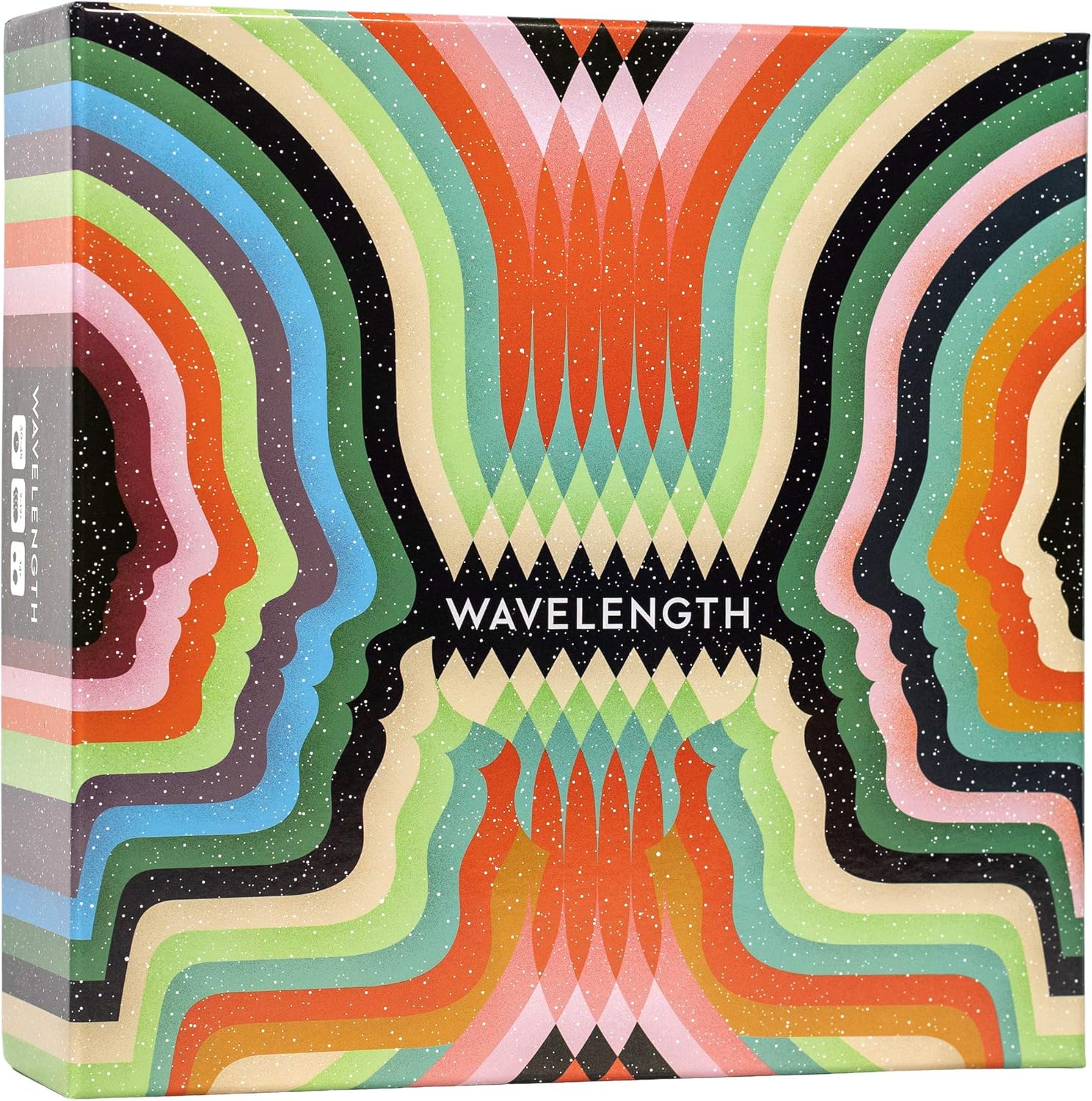
2-12 Players | 30-45 min | 14+
Wavelength might be the most interesting party game of the last decade.
Wavelength might be the most interesting party game of the last decade. Players try to calibrate where a concept falls on a spectrum (Hot vs. Cold, Good vs. Evil, Overrated vs. Underrated) using a physical dial hidden behind a screen. Your team guesses where the dial is based on your clue, but the real entertainment is the debate about where things belong.
Is a crocodile closer to Hot or Cold on the Hot/Cold scale? Is a birthday candle closer to Fire or Water? These conversations become genuinely compelling, revealing how differently people think about the same concepts. It’s a game that creates discussion as much as competition.
Best Drawing & Creative Party Games
Telestrations

Take Telephone. Add drawing. Prepare to lose your mind laughing. In Telestrations, each player starts with a secret word, draws it, passes their sketchbook to the next player who guesses what was drawn, passes it on, and so on around the table. By the time sketchbooks return to their owners, “wedding dress” has become “angry ghost,” and nobody can explain exactly how it happened.
Telestrations is virtually foolproof as a party game. Bad artists are funnier than good ones. People who can’t draw are the life of the game. You don’t need any gaming experience, if you can hold a marker, you can play.
Dixit

3-6 Players | 30 min | 8+
Dixit uses beautifully illustrated surrealist cards that look like dream paintings.
Dixit uses beautifully illustrated surrealist cards that look like dream paintings. One player gives a word, phrase, or sound that relates to their card, vague enough that not everyone guesses it correctly, but specific enough that at least someone does. Other players secretly choose cards from their own hands that might match the clue, and everyone votes on which card was the original.
Dixit rewards creativity over knowledge. There’s no “right” way to play, which makes it uniquely approachable. An 8-year-old and a 70-year-old can sit at the same table and have equal chances of winning. For mixed-age groups or parties where you’re not sure everyone’s a “gamer,” Dixit is one of the safest bets you can make.
Best Trivia & Knowledge Party Games
Wits & Wagers

3-7 Players | 25 min | 10+
Traditional trivia games exclude people who don't know the answers.
Traditional trivia games exclude people who don’t know the answers. Wits & Wagers fixes this with a brilliant mechanic: every question has a numerical answer, everyone guesses, and then you bet on whose answer you think is closest. You can win Wits & Wagers without knowing a single trivia answer, just by correctly predicting which player is most likely to know stuff.
This inclusion factor makes Wits & Wagers particularly good for parties with mixed knowledge levels. The self-proclaimed trivia expert and the person who admits they know nothing both have a path to victory.
Best Party Games for Large Groups (8+ Players)
Secret Hitler
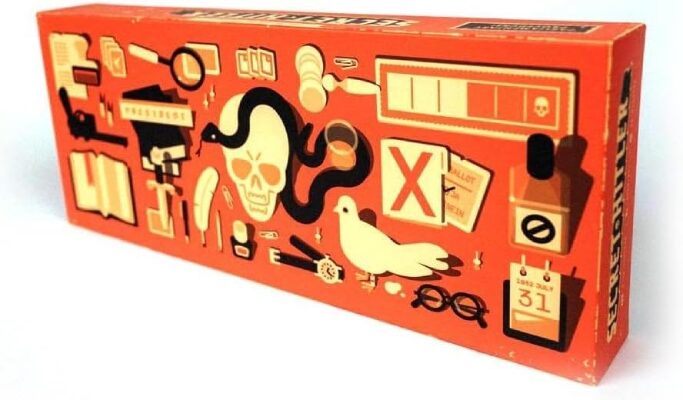
5-10 Players | 45-60 min | 17+
Social deduction games hit their peak with larger groups, and Secret Hitler is one of the best.
Social deduction games hit their peak with larger groups, and Secret Hitler is one of the best. Players are secretly assigned roles as liberals or fascists (with one player secretly being Hitler). Liberals try to enact liberal policies and identify Hitler; fascists try to protect Hitler and enact fascist policies while hiding their identities.
The genius of Secret Hitler is the paranoia it creates. Everyone suspects everyone. Innocent players start looking guilty. Seasoned liars occasionally slip up. It’s intensely social, occasionally heated, and deeply entertaining, but best for groups of players who know each other well and can laugh at accusations.
Bohnanza

2-7 Players | 45 min | 12+
For something a bit more lighthearted with large groups, Bohnanza is a card game about planting and trading bean fields.
For something a bit more lighthearted with large groups, Bohnanza is a card game about planting and trading bean fields. The trading mechanic is where the magic happens: you must trade cards you don’t want, leading to frantic negotiation and deals that fall apart spectacularly. Games scale beautifully up to 7 players without losing their charm.
Party Game Quick Reference Guide
| Game | Best For | Players | Time | Difficulty |
|---|---|---|---|---|
| Codenames | Word lovers, strategy fans | 4-8 | 15-20 min | Easy |
| Just One | All ages, mixed groups | 3-7 | 20 min | Very easy |
| Wavelength | Creative thinkers | 2-12 | 30-45 min | Easy |
| Telestrations | Everyone, especially bad artists | 4-12+ | 30 min | Very easy |
| Dixit | Mixed ages, family parties | 3-6 | 30 min | Very easy |
| Wits & Wagers | Non-trivia fans who hate trivia | 3-7 | 25 min | Easy |
| Secret Hitler | Close friend groups | 5-10 | 45-60 min | Medium |
Practical Tips for a Great Game Night
- Read the rules before your guests arrive. Nothing kills momentum faster than reading the rulebook at the table. Learn the rules yourself, then teach them in 3 minutes flat. Your guests don’t need every edge case explained, just enough to start playing.
- Start with a warm-up game. Don’t open with your most complex game. Start with something fast and easy (Codenames, Just One) to get people comfortable before moving to games with more rules.
- Keep score loosely. At a party, the score matters far less than the moments. Don’t let competitive scoring ruin the vibe. Some of the best party games barely keep score at all.
- Match game to crowd. A group of close friends can handle Secret Hitler or other intense social deduction. A first-time group meeting at a work party needs Dixit or Telestrations. Read the room.
- Have a backup plan. If one game isn’t clicking, know what you’ll switch to. Not every game works for every group, and being willing to pivot is the mark of a great host.
- Own at least one very short game. Games like Love Letter (10-15 min) are gold for between dinner and dessert, or when you’re waiting for stragglers to arrive.
Common Mistakes When Choosing Party Games
- Choosing games that take too long to explain. If your explanation takes longer than the first round, you’ve lost people. Prioritize games where the first round teaches the rules.
- Buying games based on your taste, not your guests’. You might love complex strategy games, but your work colleagues probably don’t. Choose games for them, not for you.
- Ignoring player count limits. Many great games fall apart at the wrong player count. Check before buying, a 4-player game at an 8-person party means half your guests are watching.
- Playing one game all night. Variety keeps energy high. Plan for 2-3 different games, and be ready to switch if something isn’t landing.
- Underestimating classics. Games like Codenames and Telestrations are popular for a reason, they’ve been tested by millions of groups. There’s no shame in reaching for the proven picks.
Frequently Asked Questions
What’s the best party game for people who don’t play board games?
Just One or Telestrations. Both have rules that take under 2 minutes to explain, require no prior gaming experience, and reliably generate laughter even in groups that have never played a modern board game. Dixit is another excellent choice for mixed groups.
What’s the best party game for 10+ players?
Telestrations Party Pack (up to 12 players) and Wavelength (up to 12 players) both scale beautifully to large groups. Secret Hitler handles up to 10 players well. For truly massive groups of 15+, Jackbox Party Pack games (played via smartphone) are hard to beat.
Are there good party games for families with kids?
Absolutely. Dixit works from age 8+, and Codenames Pictures (uses images instead of words) works with readers as young as 6 or 7. For a full guide on games that span generations, see our family board games by age selection guide.
How many party games should I own?
Three to five is plenty for most hosts. Aim for variety: one word game (Codenames or Just One), one drawing/creative game (Telestrations or Dixit), and one wildcard (Wavelength, Wits & Wagers, or something chosen for your specific group). You can cover virtually any party scenario with that combination. Check out our guide to the best board games for different audiences for more ideas.
What’s the difference between party games and regular board games?
Party games prioritize social interaction, accessibility, and fun moments over strategic depth. They typically play in under 30-45 minutes, scale to larger groups, and are designed to be enjoyable even for people who “don’t play board games.” If you’re curious about how long popular games actually take to play, our board game time guide breaks it all down.
Wrapping Up
The best party board game is ultimately the one your specific group will actually enjoy. When in doubt, lean toward simplicity, a game that gets everyone laughing within five minutes beats a complex masterpiece that takes 20 minutes to explain. Start with Codenames or Telestrations if you’ve never hosted a game night before, and build your collection from there.
The party games in this guide have all been proven across thousands of tables. Any of them will give you a better night than staring at your phones. Now shuffle the deck, set up the board, and let the chaos begin.