Looking for the best family board games that everyone can actually enjoy together? Whether you’re planning a weekend game night, holiday gatherings, or just want something to replace screen time, a great family game needs to be easy to learn, fun for kids and adults alike, and leave everyone wanting to play again.
We’ve rounded up the top picks that hit that sweet spot—games that won’t bore the adults or frustrate the kids. Below you’ll find our quick recommendations, followed by full reviews and buying advice.
Our Top Picks
Short on time? Here are our favorite family board games for different situations:

2-5 Players | 45-60 min | Strategy
The ultimate gateway game—easy to teach, deeply satisfying, and perfect for mixed-age groups.

2-8 Players | 20 min | Card Drafting
Adorable artwork, super quick to play, and works great with big groups. A crowd-pleaser every time.

3-6 Players | 30 min | Creative
Stunning dreamlike artwork meets imaginative storytelling. Perfect for families who love creativity over competition.

2-6 Players | 30 min | Dice Rolling
Giant monsters battling over Tokyo—kids absolutely love this one, and the dice-chucking action keeps everyone engaged.
What Makes a Great Family Board Game?
The best family board games share a few key qualities. First, they need to be easy to learn—if the rules take 30 minutes to explain, you’ve already lost half the table. Second, they should be fun for all ages, meaning kids can compete without adults having to “let them win,” and adults stay engaged rather than checking their phones.
We also looked for games with reasonable play times (under an hour is ideal), minimal downtime between turns, and high replay value. The games below cover different styles—from strategic route-building to creative storytelling to quick card games—so there’s something for every family’s taste.
1. Ticket to Ride
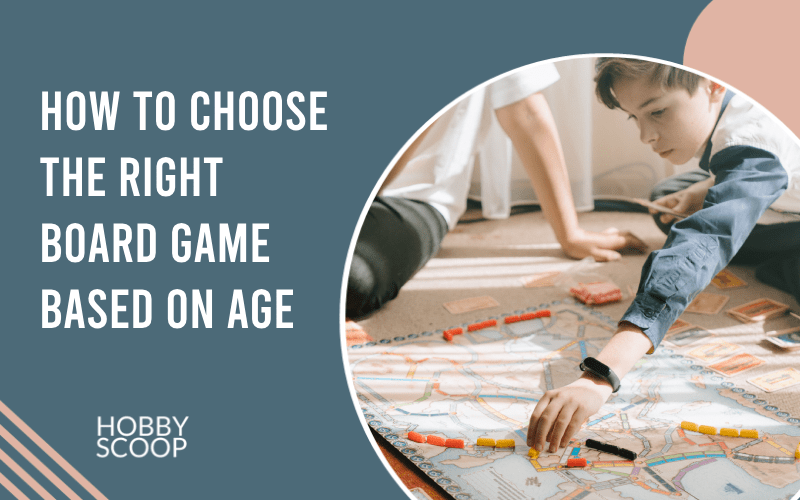
Ticket to Ride is the gold standard for family board games, and there’s a reason it’s been a bestseller for two decades. You’re building train routes across a map, collecting colored cards to claim connections between cities, and trying to complete secret destination tickets for bonus points.
What makes it work so well is the elegant simplicity. On your turn, you do one thing: draw cards, claim a route, or grab new destination tickets. Kids grasp the rules in minutes, but there’s real strategy in blocking opponents and timing your moves. The tension builds beautifully as the board fills up and routes get scarcer.
It plays great from 2-5 players, though 3-4 is the sweet spot. Games run about 45-60 minutes—long enough to feel satisfying but not so long that attention wanders. The theme is family-friendly, the components are gorgeous, and there are tons of map expansions if you want variety.
Best for: Families wanting a “main event” game that everyone can enjoy repeatedly.
Minor downside: Analysis paralysis can slow things down with overthinking players.
2. Carcassonne
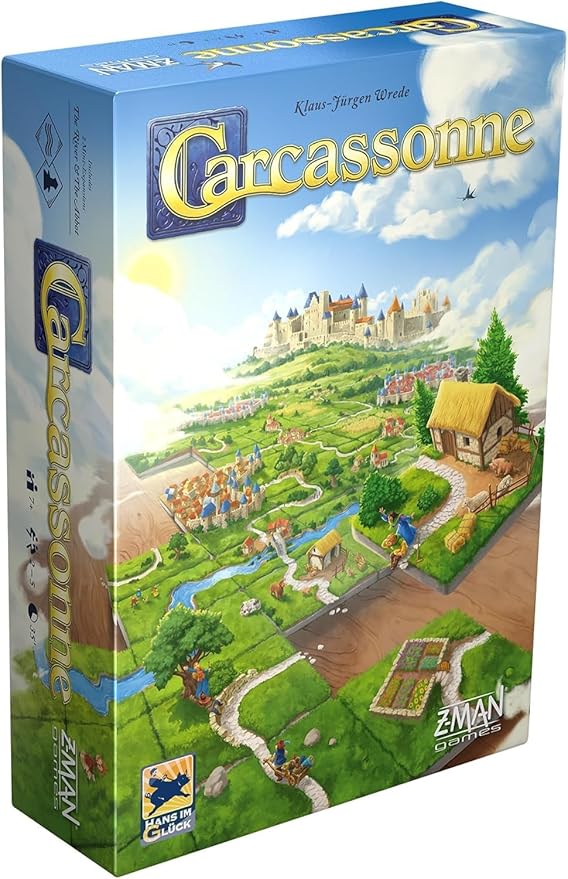
Carcassonne is a tile-laying classic where you’re building a medieval landscape together—but competing for points. Each turn, you draw a tile showing roads, cities, fields, or monasteries, place it to expand the map, and optionally put one of your “meeples” on it to claim points when that feature completes.
The beauty is watching the landscape grow organically. There’s no fixed board, so every game looks different. Kids love the tactile nature of placing tiles and the little wooden followers, while adults appreciate the spatial puzzle and opportunities for clever (or devious) plays.
Games typically run 30-45 minutes with 2-5 players. It’s easy to teach and plays quickly, making it perfect for a weeknight. The base game is excellent on its own, and there are dozens of expansions if you want to add complexity later.
Best for: Families who like building things together with a gentle competitive edge.
Minor downside: Scoring can be fiddly; using a score-tracking app helps.
3. King of Tokyo
If your kids love giant monsters, King of Tokyo is an instant hit. You play as kaiju-style creatures battling for control of Tokyo, rolling chunky dice to attack, heal, gain energy, and score victory points. It’s Yahtzee meets Godzilla in the best way possible.
The push-your-luck element keeps everyone on the edge of their seats. Do you stay in Tokyo to rack up points while getting pummeled, or retreat to heal? The power-up cards add fun variety, letting you grow extra heads, breathe fire, or become radioactive.
Games are fast (about 30 minutes) and works with 2-6 players. It’s particularly great at 4-5 where the chaos really shines. The monster theme appeals to kids while the dice strategy satisfies adults.
Best for: Families with kids who love action, monsters, and rolling dice.
Minor downside: Player elimination can mean someone sits out the final rounds.
4. Splendor

Splendor is an elegant engine-building game where you’re Renaissance gem merchants collecting poker-chip-style gems to buy development cards. Those cards then give you permanent gem bonuses, letting you afford bigger and better cards until you hit 15 prestige points.
What makes Splendor shine (pun intended) is its satisfying progression. You start scraping together gems for basic cards, but by the end, you’re snagging expensive cards for free thanks to your bonuses. The weighted gem chips feel fantastic to handle, and the gameplay is smooth as silk.
It’s a quieter, more thoughtful game than some on this list—best for families who enjoy a bit of strategy without luck-driven chaos. Plays in about 30 minutes with 2-4 players.
Best for: Families who like satisfying puzzles and engine-building mechanics.
Minor downside: Less interactive than other games; can feel like multiplayer solitaire.
5. Dixit
Dixit is a storytelling game built around gorgeous, dreamlike artwork. One player gives a clue (a word, phrase, song, or sound) for one of their cards, everyone else plays a card that might match, and then players vote on which card they think was the original. The trick? Your clue needs to be evocative enough that some people guess correctly, but not so obvious that everyone does.
The artwork is simply stunning—surreal, whimsical illustrations that spark the imagination. Kids love finding the pictures and coming up with creative clues, while adults appreciate the subtle psychology of crafting the perfect hint.
It’s a different vibe from competitive strategy games—more about creativity and knowing your family. Works best with 4-6 players and takes about 30 minutes.
Best for: Creative families who enjoy imagination over direct competition.
Minor downside: Scoring system is a bit clunky; many families play casually without tracking points.
6. Azul

Azul is an abstract strategy game where you’re drafting colorful tiles from a shared market to build patterns on your personal board. Inspired by Portuguese azulejo tiles, it’s visually striking and tactically satisfying.
The drafting mechanic is brilliantly interactive—when you take tiles, you affect what’s left for others. There’s a delicious tension between grabbing what you need and denying opponents. The Bakelite-style tiles are chunky and gorgeous, making the game feel premium.
Rules are simple (draft tiles, place them following restrictions, score points), but there’s real depth in planning ahead and adapting to what others do. Plays in 30-45 minutes with 2-4 players.
Best for: Families who appreciate beautiful components and thoughtful puzzles.
Minor downside: Can be punishing if you miscalculate (negative points for overflow tiles).
7. Sushi Go Party
Sushi Go Party is the expanded version of the original Sushi Go, adding more card types and supporting up to 8 players. You’re drafting adorable sushi cards, keeping one and passing the rest, trying to collect sets that score points at the end of each round.
It’s incredibly easy to teach (pick a card, pass the hand) and plays lightning-fast—about 20 minutes for a full game. The cute food artwork appeals to everyone, and the set-collection mechanics work for all ages. The “Party” version lets you customize which cards are in play, keeping things fresh.
This is the game to pull out when you have a big group or want something quick. It’s inexpensive, portable, and universally loved.
Best for: Large groups, quick games, and families with younger kids.
Minor downside: Card quality is just okay; sleeve them if you play a lot.
How to Choose the Right Family Board Game
With so many options, here’s what to consider:
- Age range: Check the box recommendation, but also consider maturity. A competitive 7-year-old might handle games rated 10+, while a sensitive 12-year-old might prefer cooperative games.
- Play time: Shorter games (20-30 min) work better for younger kids and weeknights. Save longer games (60+ min) for dedicated game nights.
- Player count: Make sure the game works at your typical family size. Some games are great at 4 but fall flat at 2.
- Competition vs. cooperation: Some families thrive on competition; others prefer working together. Know your crew.
- Complexity: Start with gateway games and work up. Nothing kills game night faster than a 20-minute rules explanation.
FAQs About Family Board Games
What’s the best family board game for beginners?
Ticket to Ride and Sushi Go Party are both excellent starting points. Simple rules, engaging gameplay, and broad appeal.
What’s a good family game for just 2 players?
Azul and Carcassonne both play excellently with 2. Splendor is also great head-to-head.
How do I get my family interested in board games?
Start with something quick and visually appealing (like Sushi Go Party or King of Tokyo). Don’t force it, keep it fun, and let winners gloat a little.
Are expensive board games worth it?
Often, yes. Quality components last longer and feel better to play with. But price doesn’t always equal fun—some of the best games are under $30.
How often should we play?
Whatever works for your schedule! Even one dedicated game night per month can become a cherished tradition.
Final Thoughts
For most families, Ticket to Ride is the best all-around pick—it’s stood the test of time for good reason. If budget is a concern or you have a big group, Sushi Go Party delivers incredible value. And for families with younger kids who want excitement, King of Tokyo brings the fun.
Whatever you choose, the best family board game is the one that gets everyone around the table, phones down, laughing together. Happy gaming!
]]>